Pressure Washing
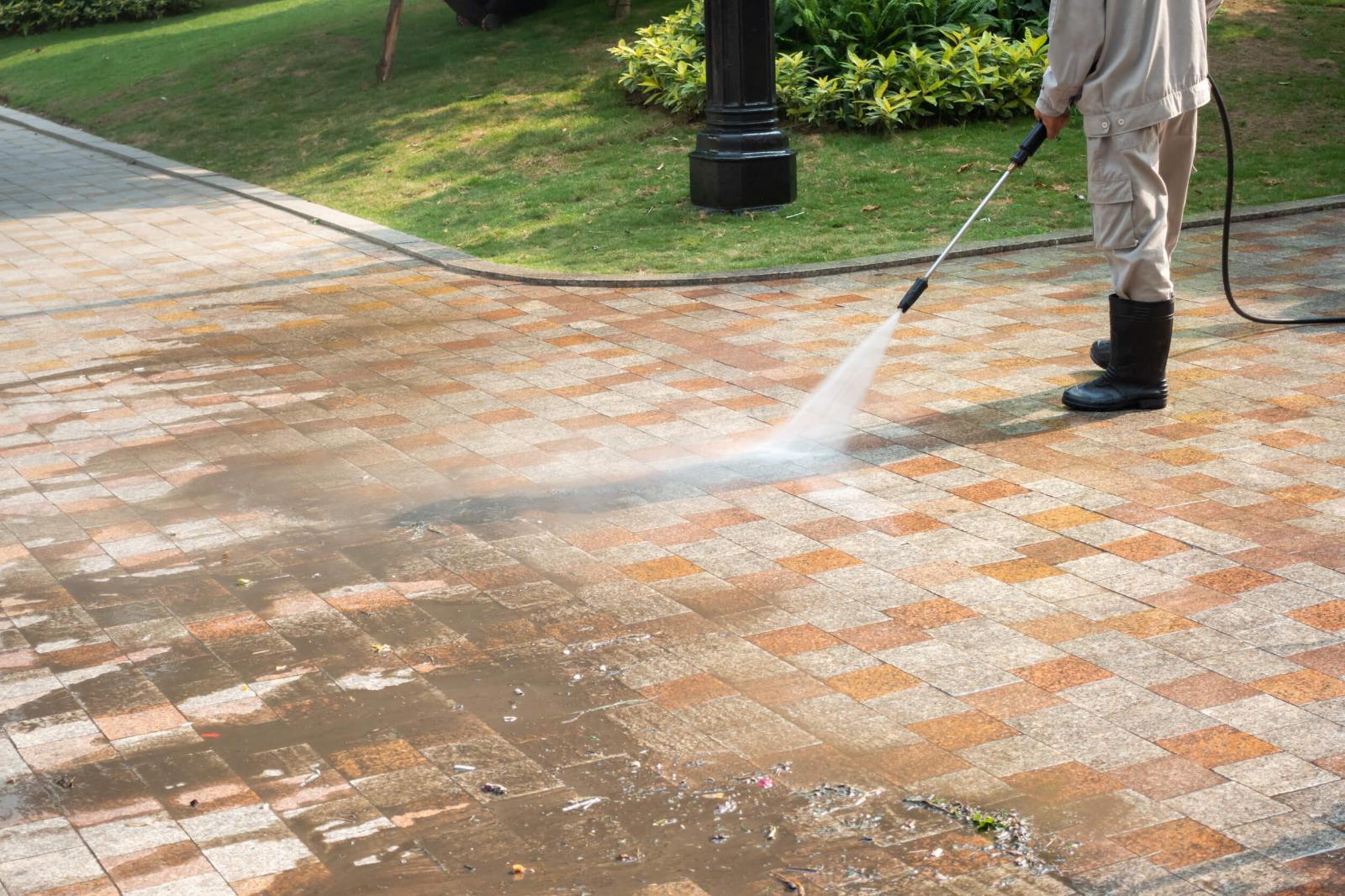
Pressure washing uses a high-pressure stream of water, typically running between 1,500 and 3,000 PSI, to physically blast dirt, grime, oil, mold, and ground-in stains off durable surfaces. Unlike soft washing, which relies on cleaning solutions to dissolve stains, pressure washing relies on force. That force is exactly what concrete, brick, pavers, and stone need to come fully clean. We offer professional pressure washing across Mauston, Wisconsin Dells, Baraboo, Reedsburg, and the surrounding 70-mile radius, and we use the right pressure for the right surface every time.
Ideal for: Blasting away tough dirt, grime, mold, and mildew from durable surfaces like concrete driveways, stone, and brick
Book Now
When to Use Pressure Washing (and NOT Soft Washing):
Heavily Stained Concrete Driveways and Sidewalks: For deep-set oil stains, tire marks, or ground-in dirt on durable concrete surfaces, the high force of pressure washing is essential to effectively lift and remove these stubborn contaminants. Soft washing might clean the surface, but it's unlikely to fully remove deeply embedded stains without extreme chemical concentrations.
Hard-Surface Patios (Brick, Pavers, Stone): Similar to concrete, these surfaces can withstand high pressure and often accumulate tough dirt, moss, and grime that benefits from a powerful blast.
Unfinished or Heavily Soiled Decks (prepping for re-staining): If you need to remove old stain, paint, or deeply embedded dirt before applying a new finish, the abrasive nature of pressure washing is often necessary. Soft washing wouldn't be strong enough to strip a finish.
Rust Stains on Concrete: While some specialized soft washing solutions exist for rust, pressure washing combined with specific rust-removing chemicals is generally more effective for eliminating rust stains from concrete surfaces.
Fun Fact:
The concept of pressure washing was accidentally discovered in 1926 by Frank W. Ofeldt II in Pennsylvania. He was working on a whiskey still (yes, during Prohibition!) and noticed that when wet steam from the still hit his greasy garage floor, it actually cleaned the grease! This sparked the idea for the first steam pressure washer, initially called the "High-Pressure Jenny.
Why Choose Us
A pressure washer in the wrong hands can do real damage. We have seen siding etched, mortar joints chewed up, wood splintered, and windows cracked by people who treated a pressure washer like a power tool instead of a precision instrument. Doing this work right means knowing when to use 1,500 PSI versus 3,000, when to switch tips, when to back off the surface, and when to put the wand down and use soft washing instead. We are a soft wash company first, which means we know exactly when pressure washing is the right answer and when it is not. That judgment is half the job. The other half is technique: steady passes, proper angles, the right pre-treatment for the stain, and a finish rinse that does not leave streaks or stripes. The result is a clean surface without the collateral damage.
We are also water-efficient. A professional pressure washer uses significantly less water than a garden hose to clean the same area, often around half. That matters for homeowners on wells and for anyone who cares about not wasting water on a long cleaning job.